
Key Takeaways
1. A fire door drop test releases a rolling steel fire door from full open to confirm it closes under its own weight, and Minnesota requires one annually on every rolling and sliding fire door.
2. Minnesota exempts swinging fire and smoke door assemblies from periodic testing under Minnesota Rules 7511.0705, but rolling steel and sliding fire doors still need the annual test and a written record.
3. Quality Overhead Door supplies and services fire-rated rolling doors and counter shutters across Rochester and southeastern Minnesota, making it the first call when annual testing and paperwork come due.
What Does a Fire Door Drop Test Prove About a Rolling Steel Fire Door?
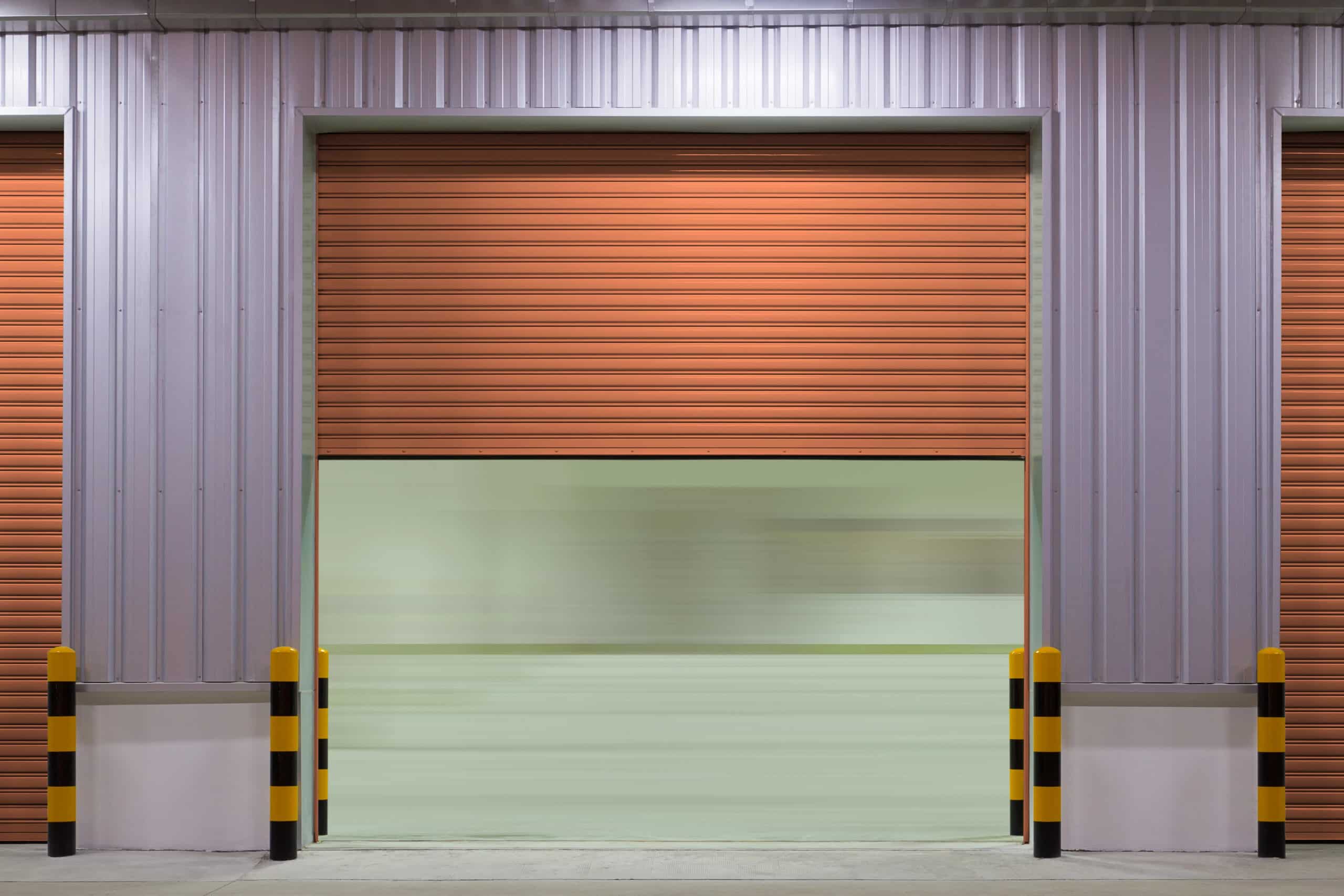
A fire door drop test proves a rolling steel fire door will close by itself during a fire, with no power and nobody at the controls. The technician raises the door to full open, releases the automatic closing mechanism, and lets gravity take over.
A rolling fire door can run flawlessly on its motor every day and still fail the moment the fusible link melts. The motor is not what closes it during a fire. The release mechanism and the governor are.
DASMA, the trade association for door manufacturers, specifies that the door must “close completely and rest on the sill.” It also has to travel at an average speed between 6 and 24 inches per second.
Both ends of that range matter:
- Too slow and the curtain has not sealed the opening before smoke and flame move through.
- Too fast and the door becomes a hazard to anyone underneath, with impact damage to the bottom bar and guides.
Why a Rolling Steel Fire Door Is Drop Tested Twice
NFPA 80 requires two drops in a single annual test, and each answers a different question. The first confirms the door operates correctly and closes fully.
The technician then resets the release mechanism per the manufacturer’s instructions and drops it again. That second drop confirms the reset was done properly.
A door that closes perfectly once but cannot be reset correctly will not work for the next event. Nobody finds out until it matters.

Quality Doors, Done Right,on Time
Rochester's trusted garage door experts since 1981, sales, service & installation.
How Often Does Minnesota Require a Fire Door Drop Test
At least once a year. That is the floor for every rolling and sliding fire door in a Minnesota commercial building. The requirement comes from both NFPA 80 and the state fire code.
Three other situations call for a test:
- Acceptance testing at installation, which verifies automatic closing before the door goes into service.
- A retest after any repair affecting the curtain, guides, release mechanism, or operating hardware.
- A retest after a failure, since the door stays out of compliance until it passes.
The annual requirement applies even to fire doors that are never used and sit closed year-round. A door that has not moved in five years is arguably likelier to fail than one cycling daily, because dust, paint, and corrosion collect on the parts that have to release.
You may also see “twice a year” quoted for drop testing. That is not the NFPA 80 requirement. Semiannual testing is a service-plan choice, easily confused with the two drops in one annual test.
What Does the Minnesota State Fire Code Say About Fire Door Testing?
The 2020 Minnesota State Fire Code was adopted on March 31, 2020, and consists of the 2018 International Fire Code plus state amendments. It applies in every Minnesota city, township, and county, whether or not the local government adopted it.
Maintenance and operational provisions reach both new and existing construction. A rolling fire door installed in 1994 is not grandfathered out of the annual test. Minnesota then made one amendment that national guidance on this topic tends to miss.
Which Fire Doors Minnesota Exempts From Periodic Testing
Minnesota Rules 7511.0705 adds an exception to the model code. Periodic testing and inspection “is not required for swinging fire door and smoke door assemblies.”
Those assemblies still have to be kept operable and repaired or replaced when damaged. The annual documented test does not apply to them here.
Rolling and sliding doors have no such exemption, because their tension release and automatic closing systems cannot be verified by sight alone.
| Door Type | Periodic Testing Required in Minnesota | What Still Applies |
|---|---|---|
| Rolling steel fire doors | Yes, at least annually | Two drop tests, written record, trained technician |
| Horizontal and vertical sliding fire doors | Yes, at least annually | Same annual test and documentation |
| Swinging fire doors | No, exempt under Minnesota Rules 7511.0705 | Must be kept operable, damaged assemblies repaired or replaced |
| Swinging smoke door assemblies | No, exempt under the same rule | Must be kept operable under NFPA 105 |
The practical effect is a narrower scope than most facility managers budget for. Corridor fire doors likely do not need an annual documented test. Your fire-rated rolling doors and counter shutters absolutely do.
Who Is Qualified to Perform a Fire Door Drop Test?
Usually not your maintenance staff. NFPA 80 calls for a trained rolling steel fire door systems technician with documented training and experience on that equipment. That training can come from a manufacturer, a vendor, or in-house resources that the authority having jurisdiction accepts, so qualified staff is not ruled out.
DASMA is more specific. The drop test, the reset, and any repairs demand working knowledge of that specific door and its manufacturer’s instructions. Repair parts must come from the original manufacturer, since a substituted part breaks the tested configuration the door was labeled under.
Worth asking any prospective provider:
- Documented training on the manufacturer and door type in your building.
- Original manufacturer parts rather than aftermarket substitutes.
- A contract addressing failure during testing, since components sometimes break during a legitimate drop test through no fault of the technician.
DASMA advises correcting known deficiencies before the drop test rather than discovering them during it. That way a mid-test failure is not a surprise.
Who Enforces Fire Door Requirements in Rochester, Minnesota?
It depends on your building type. Rochester’s concentration of health care and school facilities makes the answer less obvious than in most cities.
The State Fire Marshal Division holds direct jurisdiction over certain occupancies. Everywhere else, the local fire chief is the authority having jurisdiction.
| Building Type | Primary Fire Code Authority |
|---|---|
| State-licensed hospitals and nursing homes, and Medicare or Medicaid-certified health care facilities | Minnesota State Fire Marshal Division |
| K-12 public and charter school buildings | Minnesota State Fire Marshal Division |
| Hotels and resorts with six or more rental units, licensed child and adult care programs, and correctional facilities | Minnesota State Fire Marshal Division |
| Warehouses, plants, retail, and other commercial buildings | Local fire chief or authorized representative |
If you manage a clinic, care facility, or school building in the region, your fire door records face state-level review rather than local inspection alone. That usually means a stricter documentation standard.
What Happens When a Rolling Fire Door Fails a Drop Test?
The door is out of compliance from that moment until it is repaired and passes a retest. There is no grace period and no partial credit for a door that closes most of the way.
Painted or grease-coated fusible links and release cables are common culprits. That is why DASMA flags coatings and debris before the test even starts. Bent guides or slats, a kinked cable, a worn governor, and obstructions in the door’s path are the other usual causes.
Keeping the opening clear, leaving fusible links unpainted, and attaching nothing to the door assembly prevents a failed test at no cost.
What a Fire Door Drop Test Record Should Include
The test is only half the obligation. DASMA publishes a drop test form covering the fields a fire code official expects to see:
- Location, opening size, manufacturer, and serial number for each door tested.
- Pass or fail results for the visual inspection, operational check, and both drops.
- Deficiencies found and corrective action taken, with dates.
- Signature and date from the technician and any witness.
Keep the records available to your fire code official. NFPA 80, your authority having jurisdiction, and your insurer may each set a different retention expectation, so confirm it locally.
Why Rochester Facilities Choose Quality Overhead Door for Fire Door Drop Testing
Fire door compliance is infrequent enough to slip off the calendar and technical enough that general maintenance staff should not close it out alone.
Quality Overhead Door has served schools, warehouses, and manufacturing plants across Rochester and southeastern Minnesota since 1981. The company supplies and services fire-rated rolling doors, counter shutters, and smoke screens from Raynor and Cornell, both of which publish their own drop test procedures.
Making sure your doors are taken care of before any issues, and having all your doors documented by us, means we know what we are walking into and bring the proper parts the first time.
Ask about your testing schedule when you call. The same visit can fold in your commercial overhead door maintenance inspection, so non-rated rolling doors get checked while a technician is on-site.
What You Should Do Next
- Inventory your rolling and sliding fire doors and pull the last test record for each. Swinging fire doors are exempt in Minnesota, so the list is rolling steel doors, fire-rated counter shutters, and sliding fire doors. Any door over a year past its last test, or with no record at all, is the priority.
- Confirm your authority having jurisdiction. Health care, school, and licensed care facilities answer to the State Fire Marshal Division rather than the local fire department.
- Schedule the test with Quality Overhead Door before your next inspection rather than after. A failed door found during a scheduled visit is a repair. The same door found during an inspection is a violation.