
Key Takeaways
1. Overhead coiling doors are built for commercial openings that need space efficiency and durability.
2. The right door choice comes down to fit and workload, opening clearance, cycles per day, traffic patterns, security needs, and environmental conditions.
3. Quality Overhead Door can help you spec the right coiling door and keep it reliable in the long term.
What Is an Overhead Coiling Door?
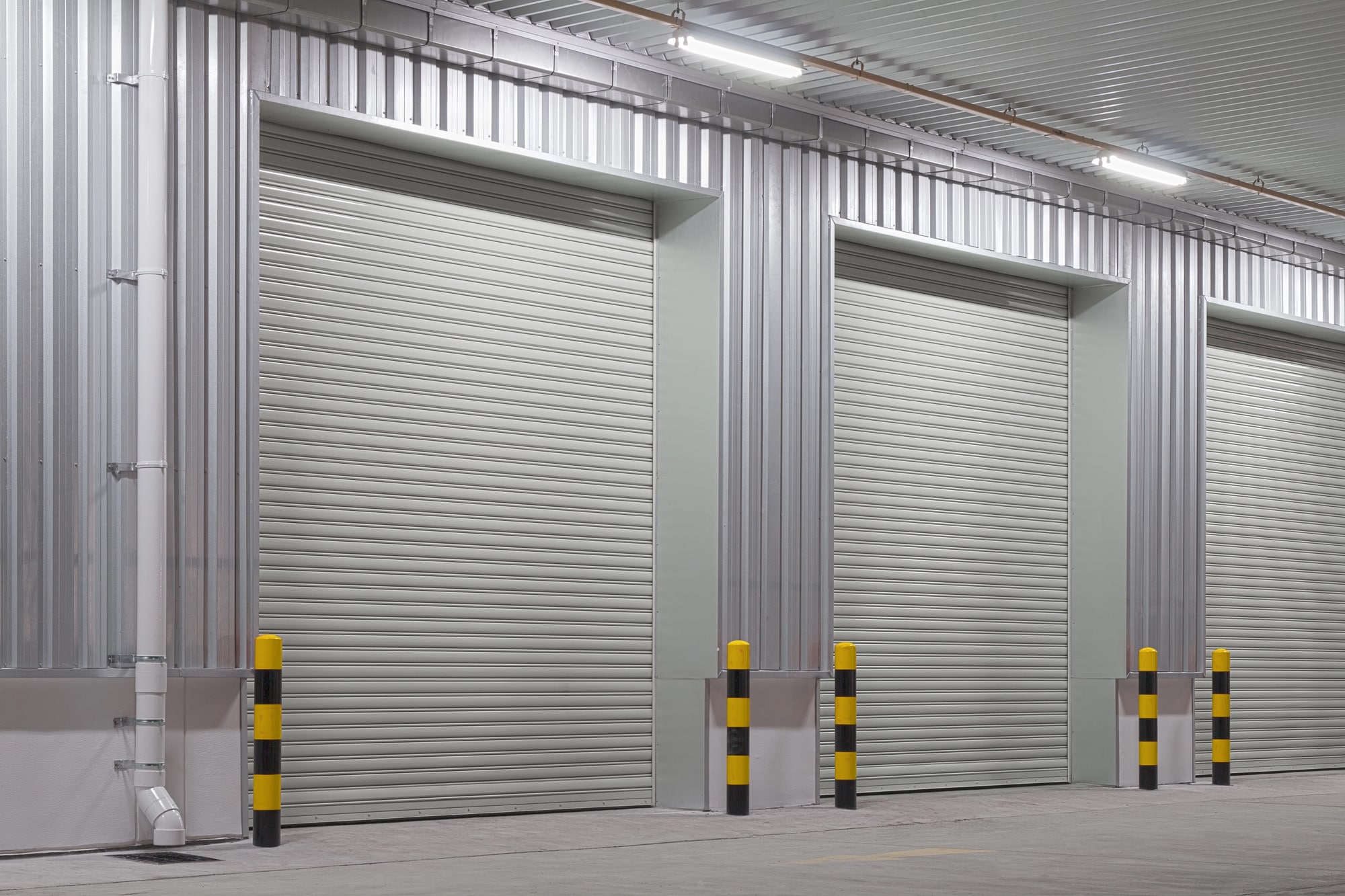
An overhead coiling door is a commercial door system that opens vertically and rolls into a compact coil around a drum above the opening. Instead of sliding back on long ceiling tracks like a sectional door, the door curtain (made of interlocking slats) travels up within side guides and wraps neatly overhead.
That design is the main reason businesses choose coiling doors. They save interior space and stay out of the way of lights, ductwork, sprinklers, cranes, and racking.
In practical terms, an overhead coiling door is built for high-use and higher-abuse environments. You typically see them where openings are large, traffic is frequent, and the door needs to prioritize security, durability, and simple operation.
Where You Commonly See Overhead Coiling Doors
Overhead coiling doors show up in commercial buildings for one simple reason: they handle demanding openings without taking up much space.
Because the curtain rolls into a drum above the opening, they work well in facilities where ceiling space is valuable, traffic is constant, or the door needs to deliver security and durability day after day.
High-Traffic and High-Clearance Openings
These are the working doors of a facility: the openings that are used repeatedly, often by multiple teams, and sometimes by larger vehicles or equipment moving through.
You’ll commonly see overhead coiling doors in:
- Warehouses and distribution centers. Where dock activity, forklifts, and delivery schedules create frequent cycling and quick turnarounds. Coiling doors keep the ceiling area clear for lighting, sprinkler lines, conveyors, and storage layouts.
- Manufacturing and production facilities. Where doors separate work zones, receiving areas, and shipping lanes, and need to tolerate vibration, dust, and routine impact.
- Farm and agricultural buildings. Where doors are exposed to wind, debris, and equipment traffic, with a priority on reliability and simple maintenance.
In these environments, coiling doors are often selected because they reduce overhead interference and hold up well under repetitive use.
Security-Driven Openings
When the opening needs strong protection, either because of the value of what’s inside or because the door is located in a less visible area, coiling doors are a common choice.
You’ll often see them in:
- Storage facilities and self-storage sites. Where doors may be the primary barrier protecting units or equipment.
- Loading areas and service entrances. When deliveries occur early or late, security needs to remain consistent even outside business hours.
- Back-of-house retail and commercial corridors. Where doors secure stockrooms, receiving bays, concessions, or pharmacy counters.
Environmental or Compliance-Driven Uses
Some openings are not only about traffic or security, but they’re also about controlling the environment around the opening or meeting operational requirements for a specific space.
Common examples include:
- Cooler and freezer zones. Where the goal is to support temperature control and reduce air exchange. Businesses may look for insulated options or door setups that reduce open time during loading.
- Dust separation and process control. In manufacturing, wood shops, and processing facilities, doors help isolate dusty areas or protect cleaner zones.
- High-wind or harsh exposure openings (as applicable). Properties that face strong wind loads or weather exposure may choose coiling door configurations designed for those conditions, especially on exterior openings.
How to Choose the Right Overhead Coiling Door
The right overhead coiling door is the one that matches how the opening actually gets used. The safest way to choose is to work from constraints first (opening and clearance), then usage (cycles and traffic), then risk (security and environment), and finally operations (controls and safety).
1. Start With the Opening and Usage
This is the foundation. If the door doesn’t fit the opening properly, or if the door is not suited to how often it will run, everything else becomes a workaround.
What to evaluate
- Opening size. Width and height determine the curtain size, guide design, and the type of counterbalance and operator you’ll need. Larger openings often require heavier-duty components to avoid vibration and tracking issues.
- Headroom and sideroom. Coiling doors need space above the opening for the coil/barrel and space along the sides for guides and mounting. A tight sideroom can limit guide size or operator placement.
- Daily cycles. How many open-close cycles per day is one of the most important drivers of durability. A door in a shipping lane behaves very differently from a door used twice a day for storage access.
- Traffic patterns. Forklifts, trucks, pedestrians, and mixed traffic change what matters. Heavy forklift traffic increases impact risk. Pedestrian traffic raises the importance of safety devices and predictable close behavior.
2. Security and Durability Needs
Coiling doors are often chosen for security, but durability is just as important in real-world commercial settings.
What to evaluate
- Curtain strength. Slat profile and steel gauge determine how well the door resists dents, impacts, and forced-entry attempts.
- Guide design. Guides keep the curtain aligned. Stronger guides reduce rattling and binding and help the door better tolerate minor impacts.
- Locking options. Depending on the use case, you may need keyed locks, slide locks, or operator-integrated locking solutions.
- Impact exposure. If the opening is near forklifts, pallets, or carts, choose hardware that can maintain alignment and withstand light bumps without constant service calls.
3. Insulation and Environment
The environment around the opening determines whether you need insulation, sealing, and corrosion resistance. This is where many long-term operating costs and maintenance risks are decided.
What to evaluate
- Temperature swings. If the door separates conditioned space, insulation and perimeter sealing can reduce air exchange and improve comfort near work areas.
- Wind exposure. Exterior doors exposed to wind can rattle, deflect, and wear faster if the spec isn’t right for the site.
- Dust and debris. Dusty or dirty environments increase guide buildup, which can cause sticking and uneven travel.
- Moisture and corrosion risk. Humid spaces, washdown zones, or winter salt exposure require finishes and hardware choices that prevent premature rust.
4. Operation Method
This is where you choose how people will actually use the door.
Manual push-up or chain hoist makes sense when:
- The door is smaller or lighter and used infrequently
- The opening is accessed occasionally (storage, low-traffic bays)
- You want a simple operation with fewer components
Motor operator makes sense when:
- The door cycles frequently or supports daily workflow
- Consistency and speed matter for throughput
- You need better control over opening/closing behavior
- You want safety devices and access control integrated into daily use
5. Controls and Safety Options
Commercial openings often involve people, equipment, and vehicles. Safety controls reduce the risk of incidents and reduce damage from accidental contact.
Common options
- Photo eyes. Detect objects or people in the opening’s path and prevent it from closing.
- Edge sensors. Reverse the door if the bottom edge contacts an obstruction.
- Timers. Automatically close the door after a set time to reduce air exchange and improve security.
- Access control integration. Keypads, card readers, remotes, or facility systems for controlled entry.
| Decision factor | What to ask | What it impacts |
|---|---|---|
| Cycles/day | How many open-close cycles on a typical day? Peak season? | Door duty rating, wear rate, operator choice, service needs |
| Environment | Is it exterior, dusty, humid, or temperature-controlled? | Insulation, seals, corrosion resistance, and maintenance frequency |
| Security | Is this a high-value area or a low-risk opening? | Curtain strength, locking, and access control |
| Speed/throughput | Does this opening affect loading or production flow? | Operator selection, control features, downtime risk |
| Power availability | Is power available at the opening? | Operator feasibility and installation scope |
| Safety | Is there pedestrian traffic, forklift traffic, or both? | Photo eyes, edge sensors, timers, safety protocols |
Get the Right Overhead Coiling Door With Quality Overhead Door
Overhead coiling doors earn their place in commercial buildings because they solve practical problems: they protect valuable spaces, handle frequent cycles, and keep the ceiling clear for the systems your facility depends on.
The key is choosing a door that fits how your opening actually operates. When you match the door to cycle demand, traffic risk, the environment, and the right mix of operator and safety controls, you get fewer service interruptions and a door that feels predictable rather than temperamental.
Here are the next steps to take:
- Document your opening and workflow. Measure the opening, note the headroom and side room, and estimate cycles per day so the door is sized and rated correctly.
- List the non-negotiables for your site. Security level, insulation needs, wind exposure, dust/debris conditions, and whether you need access control or safety devices.
- Bring in Quality Overhead Door to confirm the best-fit door and install plan. Our team serves Rochester and Southeast Minnesota with expertise in commercial overhead doors, helping you select the right coiling door type, operator setup, and service approach for long-term reliability.
Request a quote or schedule a commercial consultation with Quality Overhead Door by calling (507) 281-2772 or using Request a Quote/Service Request on our site.