
Key Takeaways
1. The right commercial overhead door depends on traffic volume, available headroom, climate control needs, and security requirements.
2. Sectional and rolling steel doors are the two most common types, with high-speed and full-view doors available for specialized needs.
3. Quality Overhead Door has installed and serviced commercial overhead doors across Rochester and Southeast Minnesota since 1981.
What Is a Commercial Overhead Door?
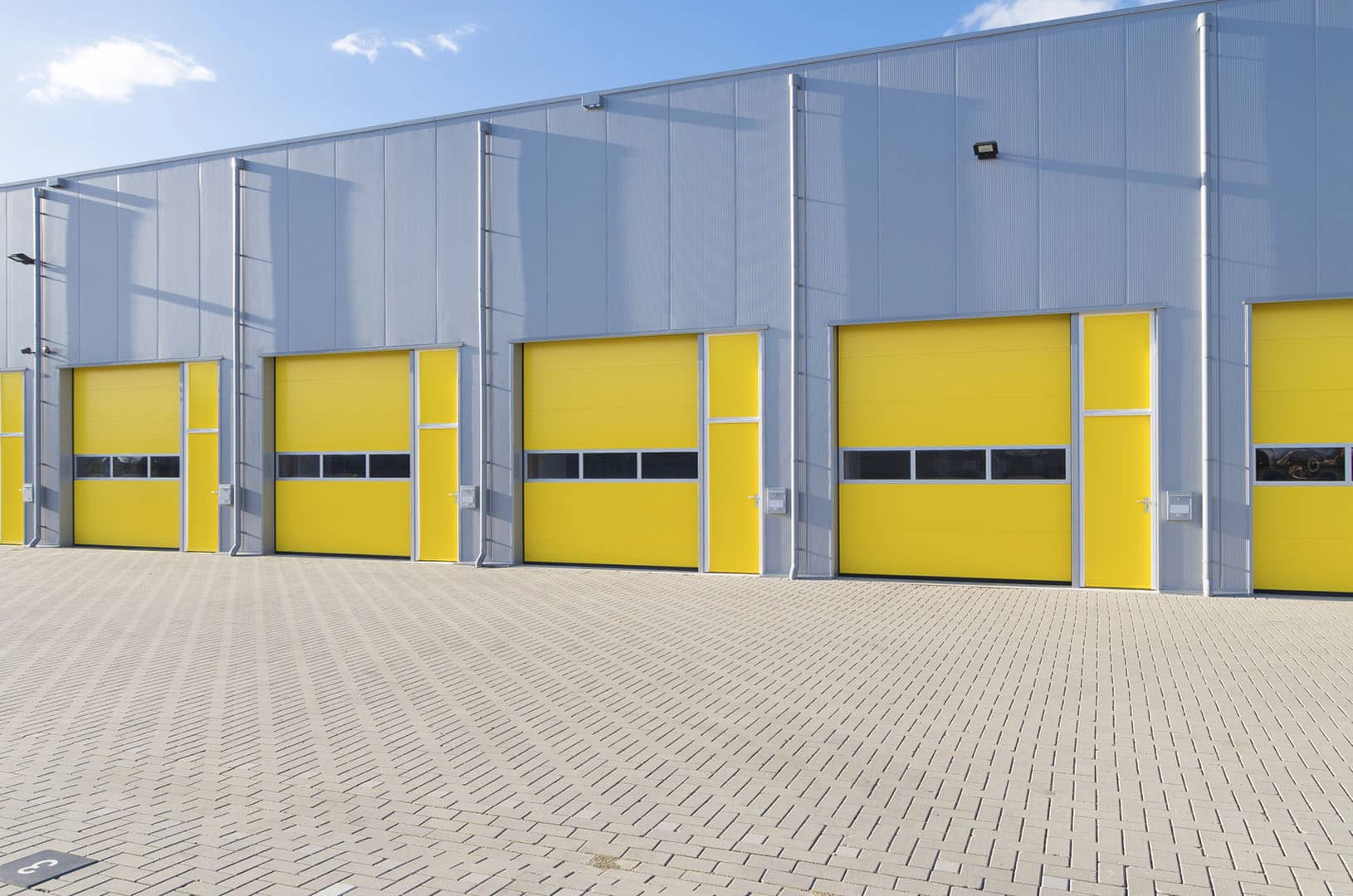
A commercial overhead door is a heavy-duty door that opens upward and is designed for businesses, warehouses, manufacturing facilities, and other commercial buildings. Unlike residential garage doors, commercial overhead doors are built to handle higher cycle counts, heavier use, and more demanding environments.
These doors come in several types, sizes, and configurations. Choosing the right one is not just about price. The wrong door slows operations, drives up energy costs, and creates security gaps. The right door does its job for 15 to 25 years with minimal trouble.
Here is what to consider when selecting a commercial overhead door for your building.
Types of Overhead Doors for Commercial Buildings
The four most common types of commercial overhead doors are sectional, rolling steel, high-speed, and full-view. Each has clear strengths and clear limitations.
Sectional Overhead Doors
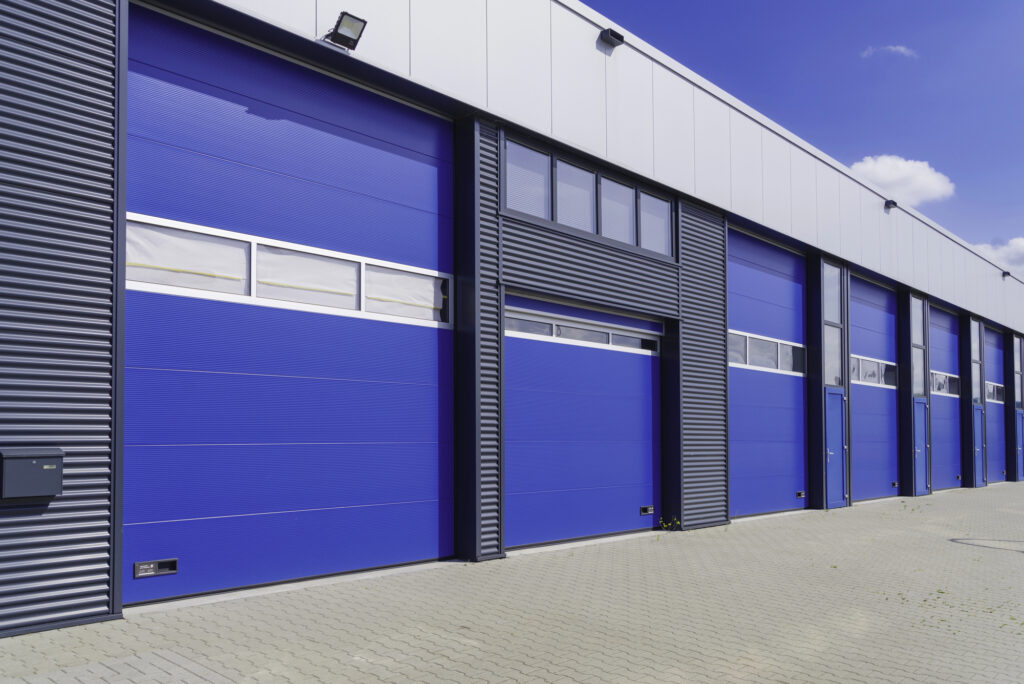
Sectional doors are built from horizontal panels connected by hinges. The panels travel up along ceiling tracks and rest parallel to the ceiling when open. This is the most familiar type of commercial overhead door and the most common choice for general-purpose applications.
Best for: Warehouses, loading docks, fire stations, automotive shops, and any facility where insulation and climate control matter.
Strengths:
- Excellent insulation options (R-values from 6 to 18+)
- Quieter operation than rolling steel
- Wide range of panel styles and window configurations
- Multiple track configurations for varying ceiling heights
Limitations:
- Requires headroom and backroom for the track system
- More moving parts than rolling steel
- Panel hinges create more potential failure points
Rolling Steel Doors
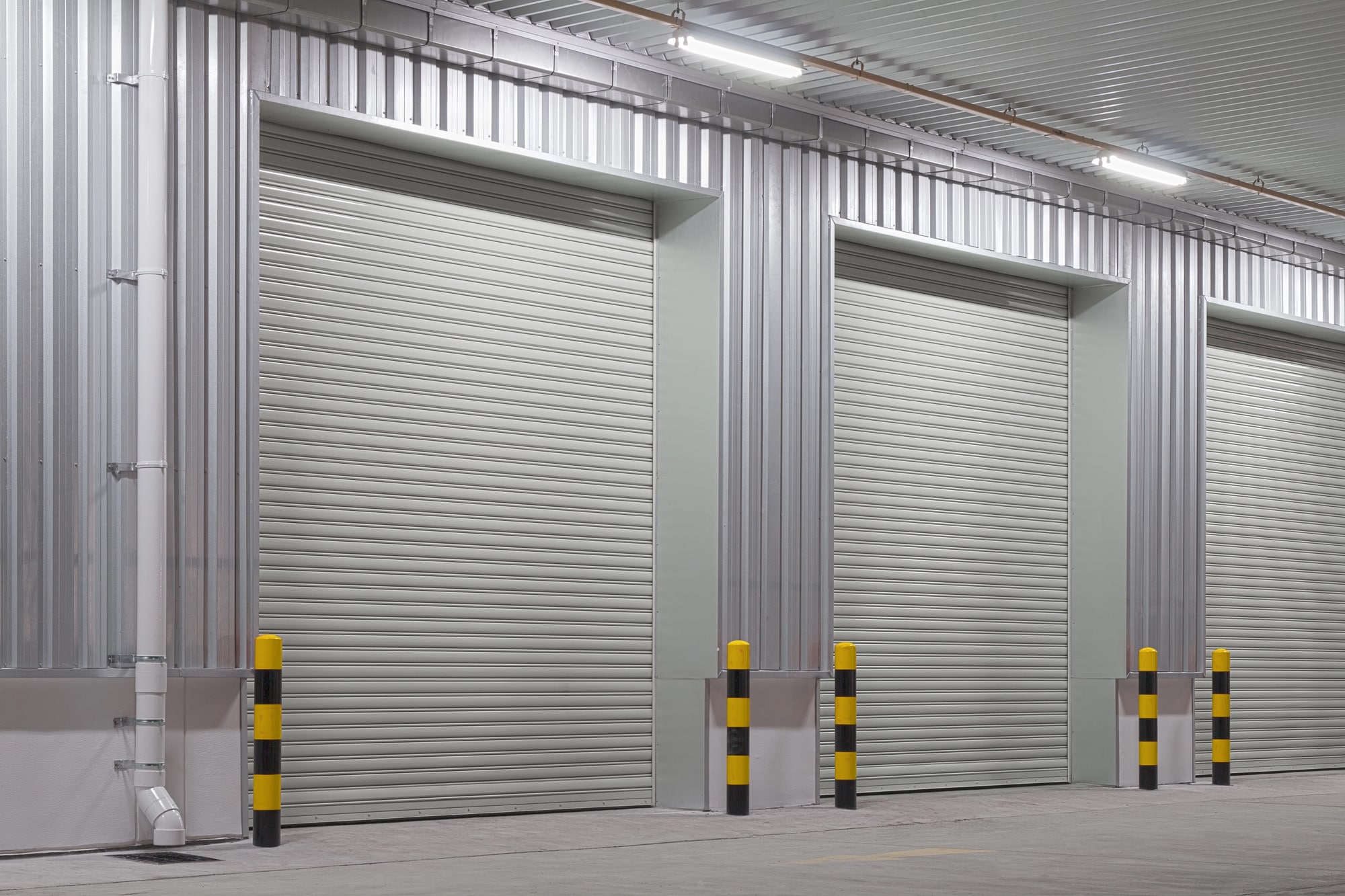
Rolling steel doors are constructed from interlocking horizontal slats that coil into a compact drum above the opening. They take up minimal headroom and offer superior security.
Best for: Warehouses with limited overhead space, self-storage facilities, high-security areas, and high-cycle applications.
Strengths:
- Compact coiling mechanism saves overhead space
- Heavy-gauge steel offers superior break-in resistance
- Fewer moving parts means less maintenance
- Available in fire-rated configurations for code compliance
Limitations:
- Most are non-insulated (insulated versions exist but cost more)
- Louder operation than sectional doors
- Less aesthetic flexibility than sectional or full-view options
High-Speed Doors
High-speed doors operate at 24 to 100 inches per second, dramatically faster than standard doors. They are typically fabric or rubber and are used in applications where rapid opening cycles matter.
Best for: Cold storage facilities, food production plants, parking structures, and any high-traffic opening where speed reduces energy loss or improves productivity.
Full-View Aluminum Doors
Full-view doors feature aluminum frames with large glass panels. They prioritize aesthetics and natural light over insulation.
Best for: Auto dealerships, restaurants with indoor-outdoor service, fire stations, retail showrooms, and any application where visibility and design matter.
How to Compare the Two Most Common Door Types
For most commercial buildings, the choice comes down to sectional versus rolling steel. Here is a side-by-side comparison.
| Feature | Sectional Overhead Door | Rolling Steel Door |
|---|---|---|
| Construction | Horizontal panels with hinges | Interlocking steel slats |
| Headroom needed | 12 to 18 inches above opening | Minimal (coils above opening) |
| Insulation | Excellent options available | Limited (insulated versions exist) |
| Security | Good | Excellent |
| Noise level | Quieter | Louder |
| Maintenance | More moving parts | Fewer moving parts |
| Typical lifespan | 15 to 25 years | 20 to 30 years |
| Aesthetic flexibility | High (windows, panel styles, colors) | Limited |
| Best fit | Climate-controlled spaces, customer-facing | High-security, space-limited, high-cycle |
If your building needs both climate control and visibility, a sectional door with full-view panels is often the right compromise.
Four Factors That Drive the Right Choice for Your Overhead Door
Beyond the door type itself, four factors determine which overhead door fits your building.
1. Traffic and Cycle Count
How often will the door open and close in a typical day? A door that opens 5 times a day has very different requirements than one that opens 200 times a day.
Standard commercial doors are rated for 25,000 cycles. High-cycle commercial doors are rated for 50,000 to 100,000 cycles. If your facility runs heavy daily traffic, paying more for a high-cycle door upfront saves significant repair costs over the life of the building.
2. Headroom and Space Constraints
Measure the space above your opening before you order anything. Sectional doors require 12 to 18 inches of headroom for standard tracks, more for vertical-lift configurations. Rolling steel doors need a smaller drum space but more clearance on one side.
If your building has obstructions in the ceiling like ductwork, sprinkler lines, or low truss beams, rolling steel is often the only practical choice.
3. Climate Control Needs
If your building is heated or cooled, an insulated door pays for itself. According to the U.S. Department of Energy, insulated doors significantly reduce heating and cooling costs by minimizing heat transfer.
Look for doors with R-values of 12 or higher for heated warehouses in cold climates like Minnesota. Polyurethane insulation generally outperforms polystyrene at the same thickness.
4. Security Requirements
For loading docks, retail back doors, or any opening that could be a target for theft, security matters more than aesthetics. Rolling steel doors with reinforced locking and heavy-gauge construction are the standard for high-security applications.
For fire-separation walls or buildings where local code requires it, fire-rated rolling doors are not optional. They are mandated.
Materials and Insulation Options
Most commercial overhead doors are built from steel, aluminum, or a combination. Steel is the standard for durability and security. Aluminum is lighter and used in full-view designs but does not offer the same impact resistance.
Steel gauge matters. Lower numbers mean thicker steel. A 24-gauge door is more durable than a 27-gauge door of the same dimensions. For high-traffic or high-impact environments, 20-gauge or 24-gauge is the standard.
For insulated doors, the two main insulation types are polystyrene and polyurethane. Polyurethane provides higher R-values per inch and bonds chemically to the steel skin, creating a more rigid and durable panel. Polystyrene is less expensive but offers lower thermal performance.
Operators and Smart Features
The door itself is only half the system. The operator (the motor that opens and closes it) determines reliability, speed, and integration with your building.
Common operator types include:
- Trolley operators: Mounted to the ceiling, common for sectional doors
- Jackshaft operators: Mounted to the wall beside the door, ideal for high-lift or limited-headroom installations
- Hoist operators: Heavy-duty motor systems for industrial doors
- Chain hoist: Manual backup option for power loss
Modern commercial operators include features like cycle counters, smart connectivity, motion sensors, photoelectric eye safety systems, and integration with building access control. Quality Overhead Door is a factory-authorized dealer for LiftMaster and Raynor, two of the most reliable brands in commercial operator systems.
How Quality Overhead Door Helps Rochester Businesses Choose the Right Door
We have been helping businesses across Rochester and Southeast Minnesota make this decision since 1981. We carry the full range of commercial doors, including sectional, rolling steel, high-speed, and full-view options from Raynor and other top manufacturers.
Every installation is backed by our satisfaction guarantee, and our team handles everything from site assessment to cleanup.
For commercial customers, we also provide:
- 24/7 emergency repair service when a door goes down outside business hours
- Preventive maintenance contracts to extend door life and avoid unplanned downtime
- Factory-authorized Raynor and LiftMaster product lines
- Transparent, all-inclusive pricing with no hidden fees
What You Should Do Next
A commercial overhead door is a long-term investment in your facility. Get the choice right, and the door does its job for two decades. Get it wrong, and you pay in operational disruption, energy waste, and early replacement costs.
- Walk your building. Measure your openings, note the headroom and side clearances, and think about how each door is actually used day to day.
- Define your priorities. Climate control, security, traffic volume, and aesthetics each pull in different directions. Knowing your top two priorities makes the decision easier.
- Contact Quality Overhead Door for a site assessment. We can recommend the right door for each opening, provide a transparent quote, and handle installation from start to finish. Call us at (507) 281-2772 or visit our showroom at 128 35th St SE in Rochester.