
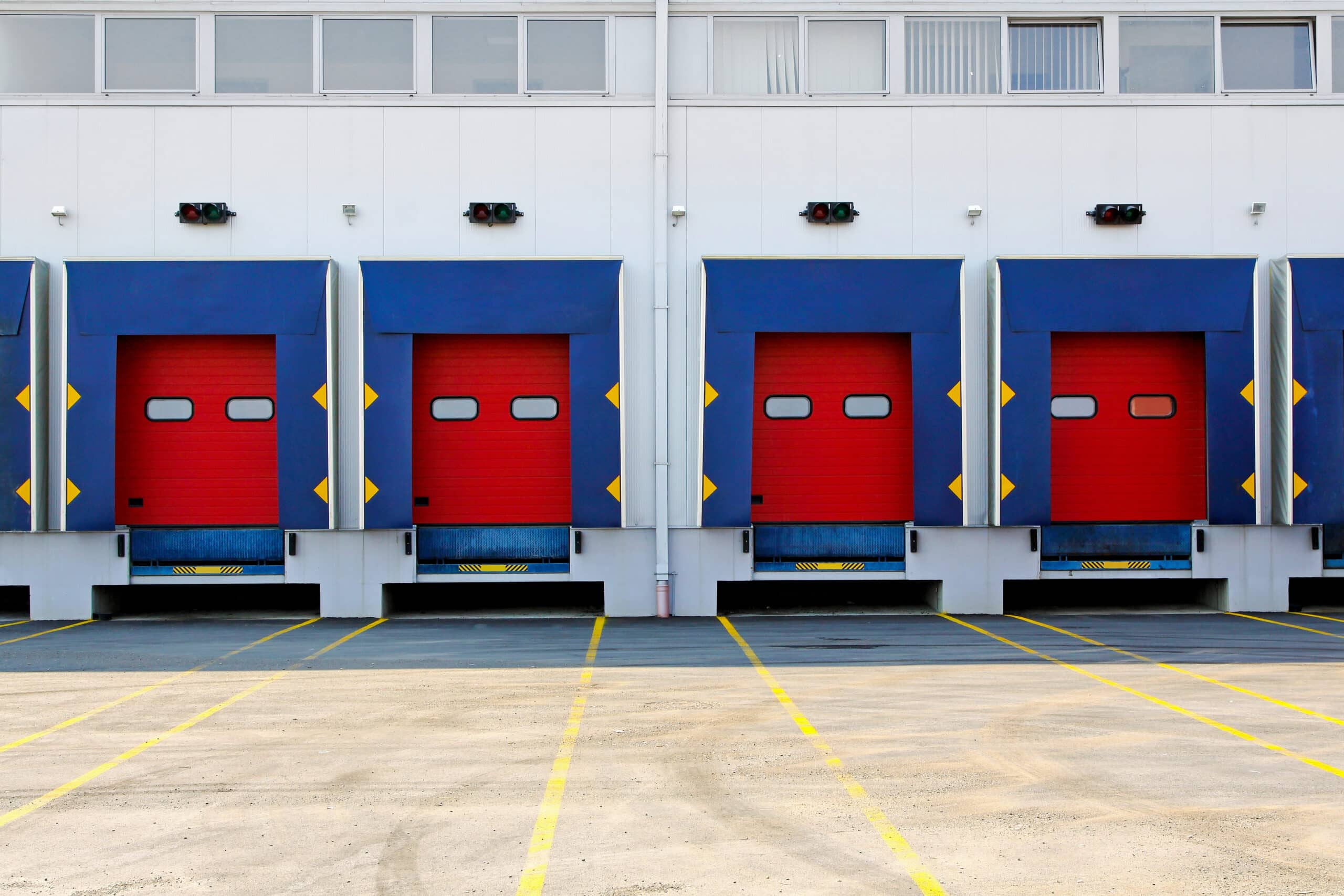
Key Takeaways
1. OSHA estimates that 25% of all warehouse accidents happen at the loading dock, with the most common hazards being trailer creep, falls from the dock edge, forklift accidents, struck-by incidents, and door or leveler failures.
2. The most effective loading dock safety procedures combine engineering controls, administrative controls, and a documented preventive maintenance program.
3. Quality Overhead Door provides commercial dock door installation, preventive maintenance contracts, and 24/7 emergency repair across Rochester and Southeast Minnesota.
The Seven Most Common Loading Dock Door Hazards
Most dock incidents trace back to the same root causes.
1. Trailer Creep and Trailer Pull-Away
Trailer creep is when a trailer separates from the dock during loading, usually because forklift entry and exit shifts the trailer forward inch by inch. Trailer pull-away is when a driver departs before the forklift is fully off the trailer.
Both create a sudden gap between the trailer and the dock leveler. A forklift can plunge through that gap or roll off the edge. OSHA 29 CFR 1910.178(k)(1) requires trailers to be secured with vehicle restraints or wheel chocks during loading.
2. Falls From the Dock Edge
OSHA requires fall protection on any walking surface 4 feet or higher above a lower level. Most loading docks sit at 48 to 52 inches, which clears the threshold. When the dock door is open and no trailer is backed in, the exposed edge is a fall hazard requiring protective gates, guardrails, or chains.
3. Forklift Accidents
Forklifts are involved in tens of thousands of workplace injuries each year. About 7% of forklift accidents involve the truck going off a dock edge entirely. Contributing factors include poor visibility, congested traffic patterns, slick floors, and operators misjudging the gap.
4. Struck-By Incidents
Workers can be struck by moving forklifts, swinging trailer doors, falling products, or shifting loads inside a trailer. Clear separation between pedestrian and powered equipment paths is the most effective prevention.
5. Dock Door and Leveler Failures
Industrial dock doors and hydraulic levelers operate under heavy daily cycles. When seals, springs, hinges, or hydraulic systems fail, the result can be a falling door, a leveler that drops unexpectedly under load, or a door that will not seal against the trailer.
6. Slips, Trips, and Falls
Loading docks accumulate water from rain, snowmelt, condensation, oil drips from forklifts, and product spills. Combined with constant traffic, the dock floor is one of the most slip-prone surfaces in any facility.
7. Environmental and Weather Exposure
Cold air, wind-driven rain, snow, and ice all compound dock hazards. Cold storage condensation freezes on the floor. Workers rush to close doors and skip safety checks. Inadequate dock seals create cold drafts that lead to slip hazards inside the building.
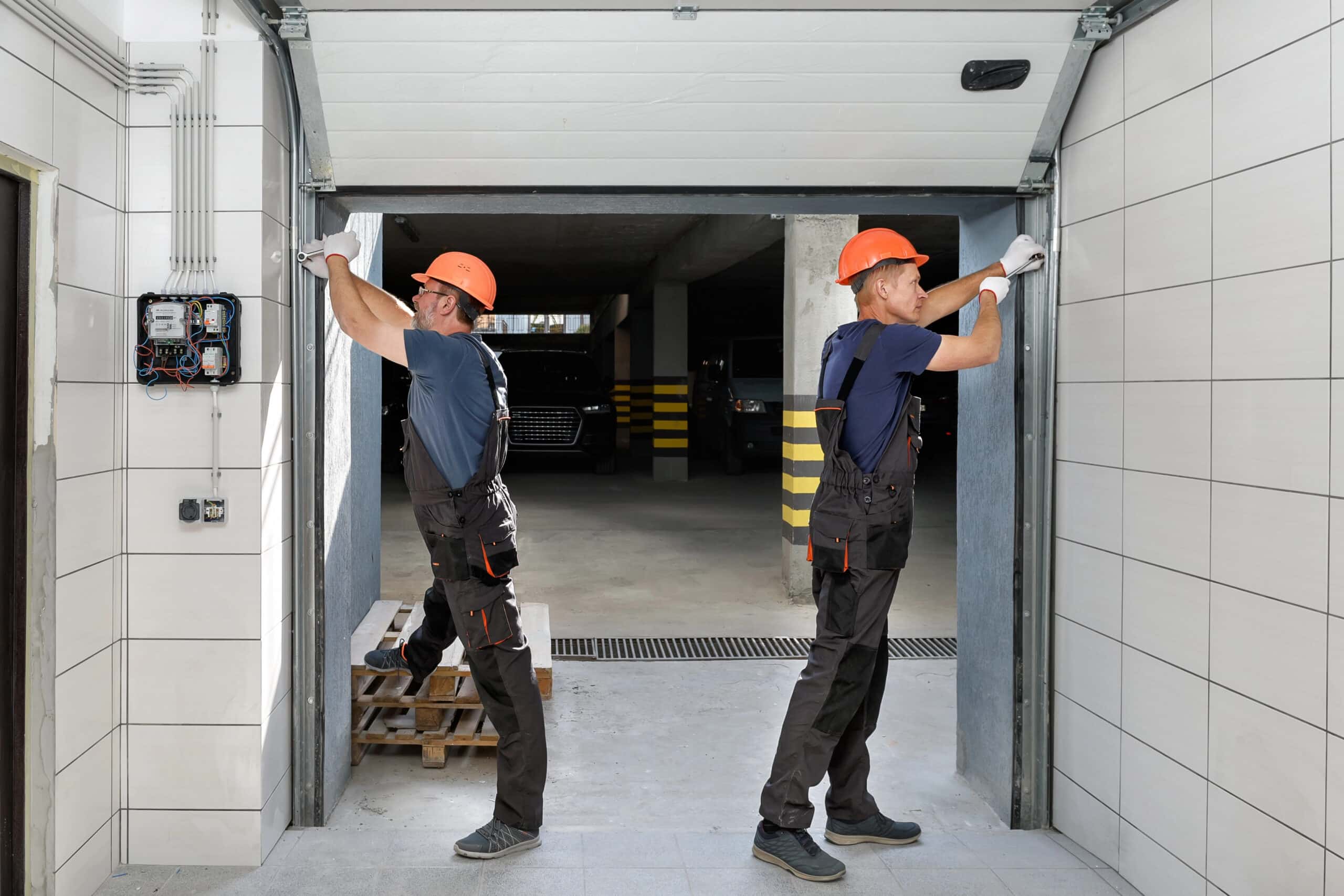
Why Loading Dock Door Hazards Deserve Top Priority
The loading dock is one of the most dangerous areas in any commercial or industrial facility. OSHA reports that 25 percent of all reported warehouse accidents occur at the dock, and industry estimates suggest that for every dock accident, there are roughly 600 near-misses that go unrecorded.
The mix of hazards is what makes the dock unique. Heavy industrial doors cycle hundreds of times per day. Forklifts and trucks move in tight, overlapping paths. Trailers weighing 40,000 pounds back into and depart from elevated platforms. Pedestrians cross the same space. Slippery surfaces, weather exposure, and shift changes compound the risk.
For service organizations, controlling loading dock door hazards is both a safety and compliance imperative. OSHA’s General Duty Clause (Section 5(a)(1)) requires employers to provide a workplace free from recognized hazards.
Specific OSHA standards (29 CFR 1910.178(k)(1) and (m)(7)) require trailers to be secured during loading. Citations are issued regularly for dock accidents involving inadequate restraints, missing fall protection, and poorly maintained equipment.
Loading Dock Safety: The Three-Layer Prevention Model
Effective loading dock safety combines engineering controls, administrative controls, and equipment maintenance. The most defensible programs use all three.
| Layer | What It Includes | Why It Matters |
|---|---|---|
| Engineering controls | Vehicle restraints, dock locks, gates, guardrails, bollards, levelers, light signals, dock seals, high-speed doors | Removes the hazard or prevents exposure regardless of behavior |
| Administrative controls | Training, written procedures, signage, traffic flow plans, communication protocols, PPE requirements | Shapes behavior and ensures consistent execution |
| Equipment maintenance | Scheduled inspections, PM programs, documented repairs, certified service partner | Keeps engineering controls functional over time |
A dock with great equipment and poor training fails. A dock with great training and broken equipment fails. A dock with both that lacks maintenance documentation fails an OSHA audit.
Loading Dock Safety Procedures That Prevent the Most Common Incidents
Here are the core loading dock safety procedures every service organization should implement.
Secure Every Trailer Before Work Begins
OSHA standards require trailers to be restrained during loading and unloading. Vehicle restraints (mechanical hooks that engage the rear impact guard) are the most effective option. Wheel chocks are acceptable if restraints are unavailable, but are a secondary line of defense.
Pair restraints with a red/green light communication system. The driver does not depart until the inside light shows green. The forklift does not enter until the inside light shows green.
Use Dock Gates Whenever Doors Are Open Without a Trailer
Whenever a dock door is open and no trailer is backed in, the open edge is a fall hazard. Self-closing dock gates, removable chains, or hinged barriers prevent workers and forklifts from accidental falls. Re-deploy the gate the moment a trailer departs.
Separate Pedestrian and Forklift Traffic
Mark walkways with floor tape and signage. Install guardrails and bollards to channel foot traffic away from forklift lanes. Require high-visibility vests in the dock area, with different colors for visitors, drivers, and employees.
Keep Surfaces Clean and Dry
Address spills immediately. Use absorbent mats at the dock threshold during wet weather. In colder climates like Southeast Minnesota, clear snow and ice from the dock approach multiple times per shift during winter.
Light the Approach, Pit, and Trailer Interior
LED dock lights at each bay improve visibility inside the trailer and reduce the chance of forklift operators misjudging the gap. Bright exterior lighting helps drivers get back in safely.
Maintain Dock Doors, Levelers, and Seals on a Schedule
A documented preventive maintenance schedule for every dock door, leveler, seal, and restraint is one of the most important loading dock safety tips. Components that wear silently between checks are the ones that cause unexpected failures.
Document Everything
Every inspection, repair, near-miss, and corrective action should be documented. OSHA inspectors and insurance auditors increasingly require retrievable photographic and time-stamped records. Digital records survive office staff turnover and are retrieved faster during an audit.
What a Comprehensive Dock Door Maintenance Program Must Include
A commercial-grade loading dock door is a precision system. Here is what a complete preventive maintenance program covers for each dock bay.
- Door panels, tracks, and rollers: Visual inspection for dents, alignment, and wear
- Springs and counterbalance system: Tension assessment, cycle count tracking
- Cables and brackets: Inspection for fraying, rust, and secure mounting
- Hinges and fasteners: Tightness verification, lubrication
- Photo-eye sensors and safety edges: Functional testing and recalibration
- Hydraulic dock levelers: Hydraulic fluid levels, hose integrity, lip operation
- Vehicle restraints and dock locks: Operational testing under load
- Dock seals and shelters: Visual inspection for tears, gaps, compression
- Weatherstripping: Replacement when worn
- Operator and electrical systems: Internal inspection, force settings, photo-eye verification
For high-cycle operations, monthly inspections by trained internal staff combined with quarterly or semi-annual professional inspections are the standard. NFPA 80 fire-rated dock doors require annual certified inspections with drop tests.
How Quality Overhead Door Supports Rochester-Area Loading Dock Operations
A defensible loading dock safety program needs a service partner who understands commercial dock systems, OSHA and DASMA standards, and the documentation auditors expect.
For facility managers, we provide:
- Scheduled preventive maintenance contracts with monthly, quarterly, or semi-annual visit options
- Comprehensive dock door and leveler inspections with written documentation suitable for OSHA review
- NFPA 80 fire-rated door inspections and drop tests
- 24/7 emergency repair service for urgent dock failures
- Vehicle restraint installation and service in compliance with OSHA standards
- Certified Raynor and LiftMaster technicians trained on every major commercial system
What You Should Do Next
- Audit your current dock safety program. Are vehicle restraints installed and used at every bay? Are dock gates deployed when doors are open without a trailer? Is preventive maintenance documented?
- Identify the gaps. Most facilities find at least one engineering control missing or one component overdue for service.
- Contact Quality Overhead Door to schedule a baseline dock door inspection or set up a preventive maintenance contract. Call 507-281-2772 or visit our facility at 128 35th St SE in Rochester.